From solo projects to major frameworks, open source maintainers are doing the work of many, for many—oftentimes without guaranteed funding.
Thankfully, programs like GitHub Sponsors can make a critical difference in the long-term health of a project. But what makes an open source project attractive to sponsors?
We asked a few internal experts to analyze eight funded open source projects on GitHub. We then used that information to identify patterns and insights that could help maintainers and contributors understand what drives sponsorships in open source. The answer isn’t one-size-fits-all, but the most successful projects tend to get several of these right.
With Maintainer Month well underway, our GitHub panel is a bit slimmer this month, but it includes:
- Abigail Cabunoc Mayes, aka @abbycabs, who works on open source maintainer programs and serves on the board of the OpenJS foundation.
- Kevin Crosby, aka @kevincrosby, who runs GitHub’s open source funding program.
- Jeff Luszcz, aka @jeffrey-luszcz, who helps manage GitHub’s open source program office (OSPO).
Below, we’ll highlight some of these projects—and break down the trends that make them stand out in today’s evolving open source landscape.
In this analysis, we saw that projects that accomplish the following tend to receive funding:
- Community engagement drives success: Projects with passionate user bases that value both the maintainers and the project.
- Projects that solve specific pain points can build powerful communities: Solving difficult or niche problems in unique ways unlocks value for the user.
- User-facing tools and packaging often get more visibility: Packaging tools or “products” that developers and members interact with daily. In contrast, foundational infrastructure projects that power these tools can struggle for visibility and funding, despite being essential to the ecosystem.
- Offer value in other ways that matter: Projects offering clear value through support contracts, training, memberships, or other services.
Get the full analysis >
Website Source
C++ HTML JavaScript CMake Objective-C++ Swift
📜 BSD 2-Clause License
Started by the former maintainer of SerenityOS and funded by one of the cofounders of GitHub (Chris Wanstrath, aka @defunkt), Ladybird is an independent, cross-platform web browser being built from scratch in C++/Swift that ships its own LibWeb rendering and LibJS JavaScript engines.
The project’s 501(c)(3) Ladybird Browser Initiative rejects ad deals and search‑engine royalties outright, funding itself only through unrestricted donations. That “no strings attached” stance resonates with privacy‑minded companies and individuals.
Ladybird uses a sandboxed multi-process architecture and targets Linux, macOS, and other Unix-like systems—aiming to offer a modern, standards-compliant alternative that relies on zero Chromium or Gecko code.
Ladybird is a perfect example of values-based funding. Kevin expands on this: “There’s a desire among people for less data collection via web browsers and search engines, and Ladybird offers an untracked web experience.” Tapping into users’ values—like privacy, independence, or ethical tech—can motivate sponsorship beyond just technical features.
“This is a huge deal,” Kevin says. “The dream of an OSS web browser is one that a lot of people are ready to buy into. People are willing to pay not to have their data sold—data integrity is super valuable.”
Ladybird also benefited from a strong “founder effect”: it was launched by well-known developers in the open source community, which helped it quickly attract attention and funding. Abigail speaks to this: “Projects started by well-known community members can gain momentum and financial backing much faster than those building an audience from scratch. While most projects in this list took years to build their funding community, Ladybird leveraged its founders’ reputations from day one.”
Website Source
Vim Script Lua C CMake Python Shell

📜 Apache 2.0 License
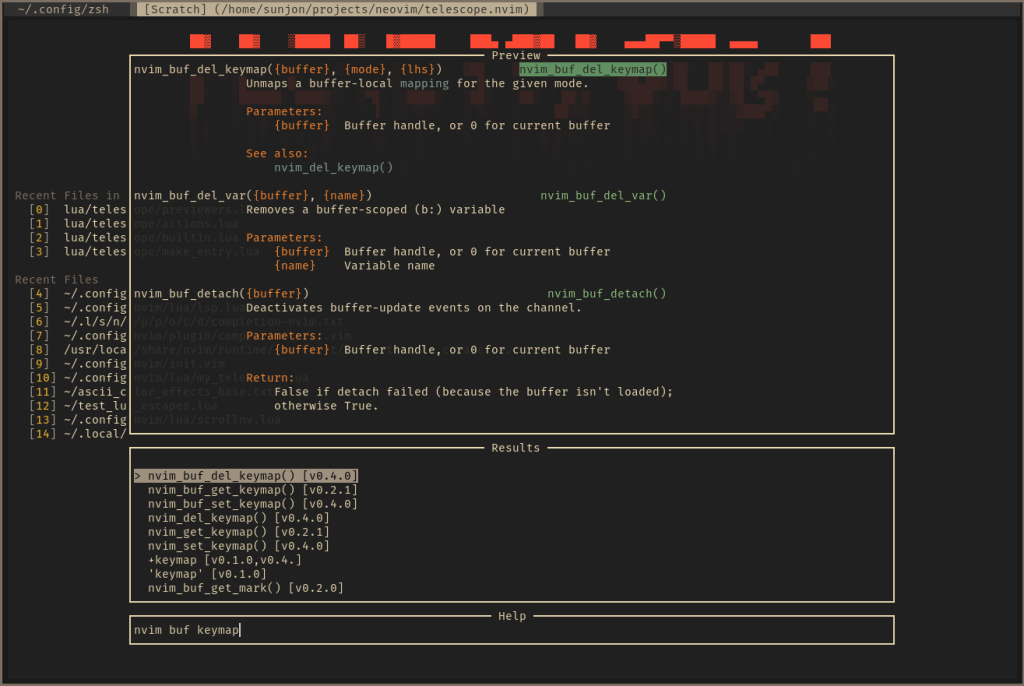
Neovim is a modern reimagining of the classic Vim text editor, designed to enhance extensibility, maintainability, and user experience. Launched in 2014, it introduces features like built-in Language Server Protocol (LSP) support, asynchronous I/O, and Lua scripting capabilities, all while maintaining compatibility with most of Vim’s features .
By swapping Vim‑script internals for an embedded Lua runtime, asynchronous job control, and a remote‑UI RPC API, Neovim can act as:
- A terminal‑first IDE with built‑in LSP, Tree‑sitter syntax trees, an embedded terminal, and virtual‑text/inline‑diagnostics,
- An embeddable component inside other apps, or
- A headless background process that multiple GUIs attach to.
Neovim has also cultivated a thriving ecosystem. Their delightful collection of plugins has become a major part of its appeal and funding story, offering developers highly customizable experiences out of the box.
Neovim perfectly captures maybe the strongest funding pattern we’ve seen: developers will pay to support tools they use every single day and that have become a part of their identity.
Jeff gets it: “People are passionate about their text editors. And developers love Neovim because it continues to improve things.”
Kevin continues: “A common thing is that tools that are more user facing get more funding because they’re more top of mind—whereas tools that are lower in the stack don’t get as much visibility. People really care about their text editors and identify with their editor.”
Source
PowerShell

📜 MIT License
Kelvin Tegelaar builds multiple PowerShell modules for his community. RunAsUser is one featured module that lets you launch processes in the security context of the currently-logged-on user—even when the script itself is running as SYSTEM.
That’s handy for Remote Monitoring and Management (RMM) tools, scheduled tasks, or other automations commonly used by system administrators and managed service providers that normally run under the SYSTEM account but occasionally need to interact with resources that only the interactive user can access.
When you solve a pain point for a specific audience, they’re more likely to back you financially. Kelvin does this by making the lives of Windows system administrators (or sysadmins for short) easier. RunAsUser is a specific example of this.
“The users of this project value the maintainer, Kelvin’s, support,” Kevin says. “It’s not only that the project is interesting, but he’s also giving value to sysadmins who use this.” We can see this reflected on his GitHub Sponsors page, where Kelvin is very close to reaching his 2,000 monthly sponsors goal.
What’s notable here is how enterprise budgets can flow to open source. “Kelvin understands the pain of sysadmins who work with Windows environments,” Jeff says. “Since his users are at work, some of this sponsor money may come from organizational funding via GitHub Sponsors.”
So if you’re looking to fund your open source work, consider building tools that solve workplace headaches—you may just tap into a problem area that is more likely to attract funding.
Website Source
C C++ Python CMake JavaScript

📜MIT License
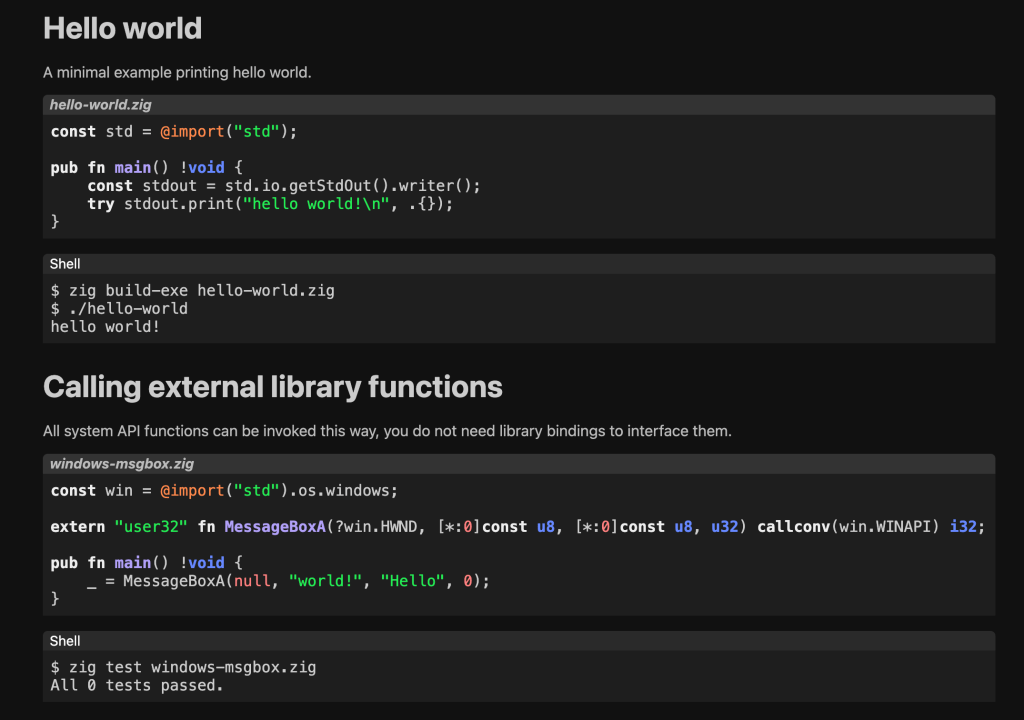
Zig is a low-level, LLVM-based programming language and toolchain aimed at building fast, small, and reliable software. It serves as a C alternative with first-class cross-compilation, C/C++ interop, and a built-in package and build system that lets you write, compile, test, and cross-compile code from one unified CLI.
It’s also a language that has drawn some comparisons to Rust.
Despite the surface‑level comparisons, Rust and Zig lean into different design goals**.** Rust centers on memory safety and fearless concurrency; its ownership model lets teams write everything from device drivers to web services, and it’s often chosen to speed up Python by compiling hot paths into native extensions with crates such as PyO3 and build tools like Maturin.
Zig, by contrast, bills itself as a “better C”: a tiny language with first‑class C interop, a unified build system, and zero‑friction cross‑compilation that can emit compact, static binaries for dozens of ‑target triples from one CLI. Experimental back‑ends for SPIR‑V, PTX, and AMDGCN mean you can write GPU kernels in Zig today, but that work is still early; the language’s headline appeal remains simplifying low‑level systems tasks and modernizing existing C/C++ codebases—not specializing in GPU or ML‑inference workloads.
“Zig shows us a different funding approach that’s worth noting,” Abigail says. “They’ve built substantial sponsorship primarily through grassroots developer support rather than enterprise backing. While most open source projects eventually pivot toward corporate funding, Zig demonstrates that passionate individual developers alone can sustain meaningful financial support when they truly believe in a project’s value.”
Jeff echoes this: “There is a universe of esoteric programming languages that are designed to solve problems with other languages. Because it’s smaller and doesn’t have a foundation, people are voting with their dollars.”
The takeaway? Developers will sponsor projects that are solving problems in ways they care about.
Website Source
JavaScript

📜 MIT License
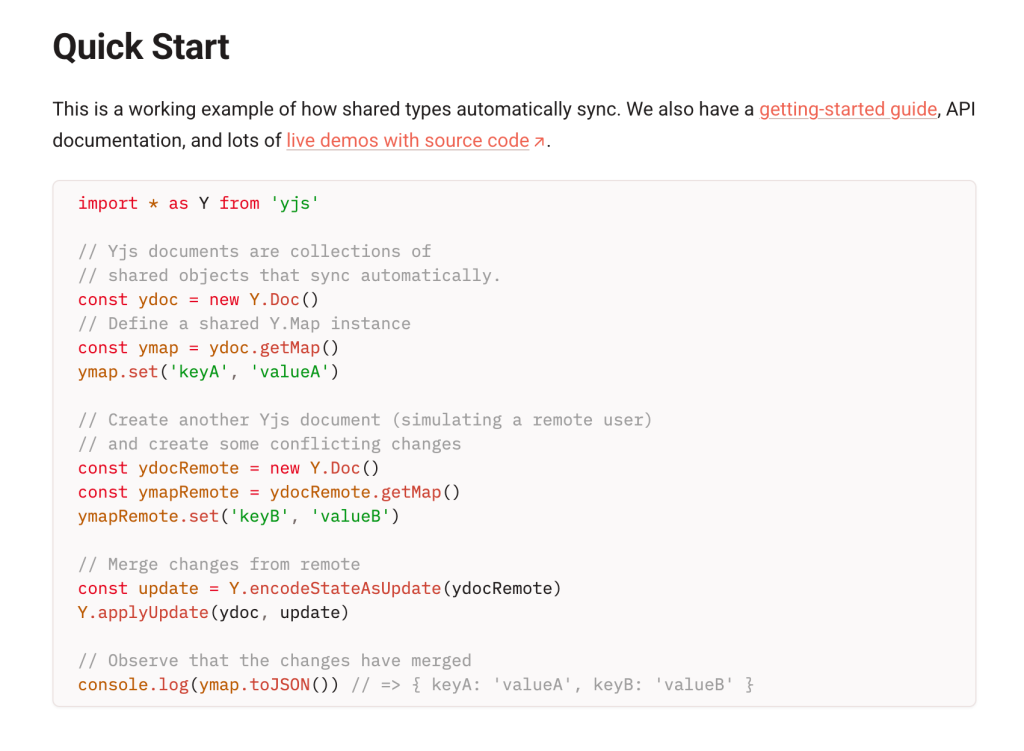
Imagine building collaborative apps where users can edit together in real time—no conflicts, no lag, no central server issues. Yjs makes that a reality. It’s a high-performance conflict-free replicated data type (CRDT) framework that turns any data structure—text, JSON, rich-text, drawings—into an automatic peer-to-peer collaborative model. It lets multiple peers edit the same document simultaneously (offline or online) and syncs changes efficiently over any transport (WebSocket, WebRTC, WebRTC-data, etc.) with automatic conflict resolution.
In simpler terms, it solves a problem that not many other libraries are solving when it comes to enabling multiple people to work together with the same data set.
As real-time collaboration becomes essential with data sets, especially in an increasingly AI- and ML-dominated world, Yjs is positioning itself as the go-to solution.
Kevin sees this bigger picture: “The need for data collaboration is becoming more important. We’re seeing tools and underlying libraries try to solve this problem. That can be data catalogues, data cleansing, data compliance, and data governance, but also building models and applications which need data lineage and management—this becomes more important with AI and agentic applications.”
Yjs’s approach is smart because it combines solving a tough technical problem and offering a clear path to support. Jeff speaks to this: “They’ve done a good job. They have a bunch of training and onboarding resources, which makes it easy for people to learn—and by extent sponsor.”
When you tackle a hard problem few others are solving, great docs + support = a clear path to sponsorship success.
Website Source
Go HTML

📜 Apache 2.0 License
Caddy is a modern, open source web server and reverse proxy written in Go that automatically provisions and renews TLS and PKI certificates for every site it hosts. It sports a modular architecture, JSON-API configuration, and cross-platform binaries, letting you spin up secure sites and services with a single command.
Caddy’s popularity stems from its unique solution for automatic HTTPS and features like good documentation and a modular architecture. The project is fully open source, but business sponsorship ensures ongoing support and software viability. Sponsors benefit from direct support, priority features, and custom patches, offering a more affordable option compared to proprietary software like Traefik Enterprise or nginx Plus.
Caddy makes internet security easier with automatic HTTPS via the TLS and PKI certificates. Standardizing this makes it easier for developers to enable privacy and security.
Even in the crowded web server space, Caddy has built significant sponsorship momentum. “If you look at their repo’s ‘Getting Help’ section, becoming a sponsor is a very prominent piece of the README,” Kevin says. Maintainers and communities that explain a clear sponsorship need and show how others support the project are likely to get more funding.
Caddy’s success also comes down to documentation—it offers a good bit of it. “Documentation is a critical but often overlooked driver of sponsorship conversion,” Abigail says. “Projects with clear documentation create smoother onboarding paths that naturally lead to higher sponsorship rates. When users can easily understand how to use your project and see the value it provides, they’re much more likely to become financial supporters.”
Website Source
TypeScript PLpgSQL JavaScript

📜 MIT License
Graphile’s Crystal monorepo is a powerhouse toolkit that transforms your PostgreSQL database into a dynamic, developer-friendly API.
Instead of spreading packages across many repos, the Graphile team now develops everything in one place so that the pieces can evolve together. Postgres as a data management platform has become something of a de facto framework, so having a graph interface with Postgres makes it easier to leverage the data.
At its core, you’ll find PostGraphile, which auto-generates a GraphQL API from your database schema, and Grafast, an execution engine that optimizes how your data is fetched and resolved. Whether you’re a seasoned developer or just starting out, Crystal offers a modular, efficient, and scalable approach to API development, making your backend as elegant as your frontend.
Crystal’s funding success proves that if you can make it a lot easier to do a difficult thing, your project is more likely to get traction. Jeff spotted the same pattern: “GraphQL is hard. But it won as a standard—it’s still complicated, hard to get right, and there’s a need for tools and utilities to simplify it.”
So if you want funding, find technologies that are simultaneously widely adopted, critical to workflows, and difficult to implement. Then make them drastically simpler. Your GitHub Sponsors will thank you.
Website Source
TypeScript Vue Sass SCSS JavaScript


📜 MIT License
Vuetify is a powerful UI library for Vue.js that brings Google’s Material Design to life with handcrafted components. It offers a vast collection of ready-to-use elements like buttons, forms, and navigation bars, all designed to help you create beautiful applications without needing a design degree.
Vuetify remains the go‑to Material Design system for Vue 3 because it couples an exhaustive component set with strict accessibility, real theming, and an active roadmap. It’s also MIT licensed and funded through sponsorships on Open Collective and GitHub. Sponsors (from $1 to $1 500 / month) get logo placement and priority support, and the pool pays core maintainers and contract contributors each month.
Vuetify shows the “ecosystem effect” in funding—attach your project to a popular framework, and you can draft off its momentum. While there are lots of UI component libraries out there, Vuetify hit the sweet spot by making beautiful Vue interfaces simpler to build, saving developers time (and CSS headaches).
Kevin points out the natural advantage: “This took off in Vue and already has a massive community—and typically things that are in close proximity to Vue itself get a lot of exposure because of that.” Rather than building an audience from scratch, Vuetify is tapping into an existing community.
Beyond writing great code, successful open source maintainers often wear the hats of community builder, marketer, and product strategist. The projects above show that sustainable open source funding isn’t just about technical merit—it’s also about connection, clarity, and visibility.
It’s not just the technically impressive projects that get funded—it’s also the ones that build real connections with their users. Kevin says: “The most interesting thing is they have fairly engaged communities that appreciate the maintainer and the project. It’s not necessarily always the tech, but finding the people who care enough and want to fund the project itself.”
Investing in community, alongside your code, is huge for maintainers. Respond to issues promptly, engage on social media, and build those personal connections that make someone think, “Yeah, I want to support this person’s work.” Also, people like seeing community engagement—having sponsorship goals on a profile show how the community is leaning in.
The funding sweet spot is solving specific, painful problems that affect developers’ daily work. Kelvin Tegelaar’s RunAsUser shows this perfectly. Kevin explains: “The maintainer believes sponsors are an important part of their community and involves them in the development process. If you solve a niche pain point and make them part of the community, you can activate a fairly large number of sysadmins.”
The most successfully funded projects don’t just ask for donations—they clearly explain what sponsors get in return. Many offer additional benefits like support contracts, early access, community recognition, and membership.
Kevin shares an insight: “In Maintainer Month, someone said the product/value was the member list—and folks who sponsor that project get access to that list.”
When people sponsor a project, they like to feel as though they gained a benefit, even if it’s recognition or being part of the community.
Open source maintainers should also think like product managers about your sponsorship tiers. Kevin says: “If we crack what the ‘product’ is and the ICP for projects, that’s what’s going to get the money. It’s not too different from small businesses figuring out what they monetize.”
Even the most amazing project won’t get funding if people can’t easily find your sponsor button! Projects like Caddy nail this by making sponsorship opportunities front and center.
But great visibility goes beyond just adding a sponsor button. The most successful projects highlight the impact of sponsorship and showcase existing sponsors. Jeff describes the common journey: “When you start a project and get early sponsors, prove to others that people care by making your early supporters visible enough, and then others will be encouraged to support.” Those early sponsors can be the first step toward bigger funding opportunities for your project.
Whether you’re looking to support great work or grow your own project, these trends offer a starting point. Open source thrives when maintainers and contributors build together—and sustain each other.
Here’s how to get involved:
- Check out these projects to see how they might fit into your workflow
- Join in and contribute to projects that spark your interest
Want to explore more? Find more repos on GitHub’s trending page. Ready to get started? Learn more about GitHub Sponsors and start building your community today.
Whether you’re a maintainer, contributor, or just an open source enthusiast, GitHub Universe is the perfect event to connect with the community and hear about what’s next in AI-powered development. Want to demo your project at GitHub Universe? Apply for a chance to share your work with thousands of developers from around the world. Apply now 👉