

How the GitHub Issues team used client-side caching, smart prefetching, and service workers to make navigation feel instant.


The uphill climb of making diff lines performant
The path to better performance is often found in simplicity.
Learn more

Build what's next on GitHub, the place for anyone from anywhere to build anything.

Join us October 28-29 in San Francisco or online for GitHub Universe, our flagship developer event uniting people, agents, and the world's code.
The GitHub Ruby on Rails monolith is big: nearly two million lines of code and more than 1,000 engineers collaborating on it, to the tune of around 20 deployments every day. Follow along to see how we build and continually improve the tools you use every day.
How the GitHub Issues team used client-side caching, smart prefetching, and service workers to make navigation feel instant.

The path to better performance is often found in simplicity.

I used coding agents to build agents that automated part of my job. Here’s what I learned about working better with coding agents.

AI automates triage for accessibility feedback, allowing us to focus on fixing barriers—turning a chaotic backlog into continuous, rapid resolutions.
Discover tips, technical guides, and best practices in our biweekly newsletter just for devs.
Here’s how we made the search experience better, faster, and more resilient for GHES customers.

Explore the iterative development journey of GitHub’s sub-issues feature. Learn how we leveraged sub-issues to build and refine sub-issues, breaking down larger tasks into smaller, manageable ones.

The Performance Engineering team at GitHub assessed how CPU performance degrades as utilization increases and how this relates to capacity.

Pushing code to GitHub is one of the most fundamental interactions that developers have with GitHub every day. Read how we have significantly improved the ability of our monolith to correctly and fully process pushes from our users.

Take CODEOWNERS and GitHub teams to the next level. Learn about how GitHub engineering solves the age old problem of who owns what.
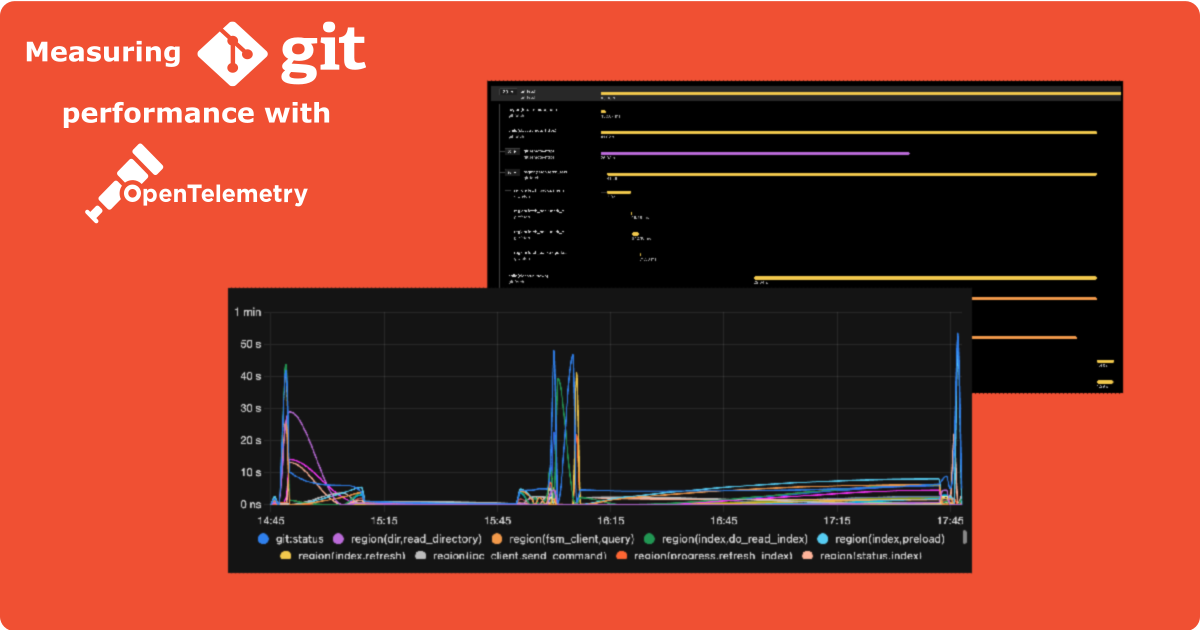
Use our new open source Trace2 receiver component and OpenTelemetry to capture and visualize telemetry from your Git commands.